
Digital marketing logo Design
A strong digital marketing logo serves as the foundation of your brand identity and can make or break your first impression with potential clients. Business owners, marketing agencies, and freelancers need logos that instantly communicate professionalism and expertise in the digital space.
Your logo needs to work across websites, social media platforms, business cards, and digital advertisements while staying memorable and recognizable. We’ll explore the essential design elements that make digital marketing logos effective, including color psychology and typography choices that build trust. You’ll also discover the most popular logo styles trending in digital marketing right now and get practical tools to create your own professional logo, even without design experience.
Table of Contents
Essential Elements That Make Digital Marketing Logos Effective
Typography Choices That Enhance Brand Recognition
Typography serves as the silent ambassador of your digital marketing brand. Clean, modern sans-serif fonts like Montserrat, Open Sans, or Poppins communicate professionalism and innovation – qualities digital marketing clients actively seek. These fonts remain crisp at any size, from business cards to billboard displays.
Custom lettering adds personality but requires careful execution. Netflix’s custom wordmark demonstrates how unique typography creates instant recognition without sacrificing readability. When choosing fonts, consider your target audience’s demographics and preferences. B2B clients respond well to trustworthy, established typefaces, while B2C brands can experiment with more playful options.
Font pairing amplifies brand messaging. Combining a bold display font for your company name with a complementary body font for taglines creates visual hierarchy. Google’s font library offers excellent pairing suggestions, making professional typography accessible to smaller agencies.
Color Psychology for Maximum Audience Impact
Colors trigger emotional responses within milliseconds of viewing. Blue dominates digital marketing logos because it conveys trust, reliability, and expertise – essential qualities for service-based businesses. Facebook, LinkedIn, and countless marketing agencies leverage blue’s psychological impact.
Red creates urgency and excitement, perfect for brands focused on growth hacking or conversion optimization. Orange combines red’s energy with yellow’s optimism, making it ideal for creative agencies and social media specialists.
| Color | Emotion | Best For |
| Blue | Trust, Reliability | B2B agencies, consultants |
| Green | Growth, Innovation | SEO firms, sustainable brands |
| Purple | Creativity, Luxury | Premium agencies, design firms |
| Orange | Energy, Enthusiasm | Social media, content creators |
Color combinations multiply impact. Complementary colors create vibrant contrasts, while analogous colors offer sophisticated harmony. Test color variations across different backgrounds to ensure consistent brand recognition.
Scalability Across All Digital Platforms
Digital marketing logos appear everywhere – from tiny favicon squares to massive conference banners. Vector formats guarantee crisp edges at any size, while raster images become pixelated when enlarged.
Design your logo at multiple sizes simultaneously. What works at 500 pixels might become illegible at 32 pixels. Simplified versions for small applications preserve brand recognition without compromising clarity. Apple’s logo demonstrates perfect scalability – the apple silhouette remains recognizable whether it’s on a business card or building signage.
Platform-specific requirements demand flexibility. Instagram prefers square formats, while LinkedIn favors horizontal layouts. Twitter headers need wide aspect ratios. Creating logo variations for each platform prevents awkward cropping and maintains professional appearance across all touchpoints.
Mobile optimization cannot be overlooked. Over 50% of web traffic comes from mobile devices, making smartphone-friendly logos essential. Test your logo on various screen sizes and resolutions to guarantee consistent quality.
Memorable Visual Symbols That Stick With Customers
Iconic symbols transcend language barriers and create instant recognition. The McDonald’s golden arches, Nike’s swoosh, and Apple’s bitten apple prove symbols can become more recognizable than company names themselves.
Abstract symbols offer versatility and timeless appeal. Geometric shapes, dynamic swooshes, and interconnected elements suggest movement, growth, and connectivity – perfect metaphors for digital marketing services. Avoid overly literal representations that limit brand evolution.
Symbol simplicity enhances memorability. Complex designs with multiple elements compete for attention and confuse viewers. The most memorable logos use one primary visual element supported by typography.
Cultural considerations matter for global brands. Symbols carry different meanings across cultures, making research essential before finalizing designs. What represents growth in one culture might symbolize something entirely different elsewhere.
Testing symbol recognition helps validate design choices. Show logo options to target audience members and measure recall rates. The most effective symbols create emotional connections that extend beyond simple visual recognition.
Design Principles for Creating Powerful Digital Marketing Logos
Simplicity strategies that work across devices
Clean, minimalist designs reign supreme in digital marketing logos because they adapt seamlessly across every platform. When your logo appears on a smartphone screen, business card, or billboard, simplicity ensures instant recognition. Strip away unnecessary decorative elements and focus on one or two core visual components that capture your brand essence.
Geometric shapes work exceptionally well for digital applications. Think circles, squares, and triangles – these basic forms scale perfectly without losing clarity. Nike’s swoosh exemplifies this principle, remaining recognizable whether it’s 16 pixels wide or 16 feet tall.
Color schemes should stay limited to two or three colors maximum. This restriction forces creative solutions while ensuring your logo looks consistent across different devices and printing methods. Single-color versions of your logo should work just as effectively as the full-color version.
Typography choices make or break logo readability on small screens. Sans-serif fonts typically perform better than decorative scripts when logos shrink down for mobile apps or social media profile pictures. Test your logo at various sizes – if you can’t read it clearly on a smartphone, it needs refinement.
Versatility requirements for multi-channel campaigns
Digital marketing campaigns span countless platforms, each with unique technical specifications and visual requirements. Your logo must perform flawlessly whether it’s appearing in an email header, Instagram story, YouTube pre-roll ad, or printed brochure.
Create multiple logo variations from the start. You’ll need horizontal, vertical, and square versions to fit different layout constraints. Social media platforms particularly demand square formats, while website headers typically require horizontal orientations.
| Platform Type | Recommended Format | Key Considerations |
| Social Media | Square (1:1 ratio) | High contrast for small profile pics |
| Website Headers | Horizontal (3:1 or 4:1) | Quick loading, scalable vector format |
| Email Marketing | Rectangular (2:1) | Outlook-friendly colors and sizing |
| Print Materials | Vector-based | CMYK color profile ready |
Background adaptability proves crucial for modern marketing. Your logo should work on white backgrounds, dark backgrounds, and colored surfaces. Create reversed versions (white logo on dark background) and ensure adequate contrast ratios for accessibility compliance.
File format preparation saves countless hours during campaign execution. Maintain vector files (SVG, AI, EPS) as your master copies, then export optimized versions in PNG for digital use and high-resolution JPEGs for print applications.
Brand personality reflection through visual elements
Colors trigger emotional responses and communicate brand values before customers read a single word. Tech companies gravitate toward blues and grays to convey reliability and innovation, while health brands often choose greens to suggest vitality and wellness.
Warm colors (reds, oranges, yellows) create energy and urgency – perfect for brands wanting to appear dynamic and approachable. Cool colors (blues, purples, greens) suggest professionalism and trustworthiness, making them popular for financial and healthcare services.
Typography personality shines through font selection. Rounded fonts feel friendly and approachable, angular fonts appear modern and cutting-edge, while serif fonts suggest tradition and reliability. The spacing between letters also affects perception – tight spacing feels urgent while generous spacing appears luxurious.
Shape psychology influences subconscious brand perception. Circles and curves suggest friendliness and community, squares and rectangles convey stability and reliability, while triangles and sharp angles imply innovation and forward movement.
Visual weight distribution affects how customers perceive your brand hierarchy. Heavier elements (bold text, solid shapes) grab attention first, while lighter elements (thin lines, outlined shapes) provide supporting information. Balance these elements to guide viewer attention exactly where you want it.
Popular Logo Styles Dominating Digital Marketing Today
Minimalist designs that convert better
Simple, clean logos consistently outperform cluttered designs across digital platforms. Modern consumers process minimalist logos 60% faster than complex ones, leading to improved brand recognition and conversion rates. Companies like Apple, Google, and Nike have mastered this approach by stripping away unnecessary elements while maintaining powerful visual impact.
The psychology behind minimalist success lies in cognitive ease. When users encounter a simple logo, their brains require less processing power, creating a positive association with the brand. This translates directly into higher click-through rates and improved user experience across websites, mobile apps, and social media platforms.
Key characteristics of converting minimalist logos include:
- Bold typography with maximum two fonts
- Negative space usage for visual breathing room
- Single-color or limited palette schemes
- Geometric shapes rather than intricate illustrations
- Scalable design that works from favicon to billboard
Digital marketing brands like Mailchimp, Dropbox, and Slack demonstrate how minimalist approaches create memorable identities that perform exceptionally well in digital environments. Their logos remain recognizable even when compressed for social media profile pictures or displayed on mobile screens.
Interactive logos for enhanced user engagement
Interactive logos transform static brand marks into engaging experiences that captivate audiences and increase dwell time. These dynamic designs respond to user actions through hover effects, click animations, or scroll-triggered movements, creating memorable brand interactions that traditional static logos cannot achieve.
Successful interactive logos incorporate subtle animations that enhance rather than overwhelm the user experience. Micro-interactions like color transitions, shape morphing, or element rotation create delightful moments that strengthen brand connection without disrupting website functionality or loading speed.
Popular interactive elements include:
- Hover animations that reveal hidden brand messages
- Click-triggered transformations that surprise users
- Scroll-responsive elements that animate as users navigate
- Sound integration for multi-sensory experiences
- Parallax effects that create depth and movement
Digital agencies and tech startups particularly benefit from interactive logos as they demonstrate innovation and technical expertise. Brands like Mozilla, GitHub, and Medium use interactive elements strategically, ensuring animations serve functional purposes while maintaining professional credibility.
The key lies in balance – interactive logos should enhance brand storytelling without becoming gimmicky or slowing down page performance. When implemented correctly, they can increase user engagement by up to 40% and significantly improve brand recall rates.
Animated elements that boost social media performance
Animated logos dominate social media feeds because they naturally draw attention in environments saturated with static content. These moving elements can increase engagement rates by 45% compared to static alternatives, making them essential tools for digital marketing success across platforms like Instagram, TikTok, and LinkedIn.
The most effective animated logos follow the three-second rule – they complete their animation cycle within three seconds to match social media attention spans. This constraint forces designers to create impactful movements that communicate brand personality quickly and effectively.
Successful animation styles for social media include:
| Animation Type | Best Platform | Engagement Boost |
| Logo reveal | Instagram Stories | 35% |
| Looping motion | Facebook/LinkedIn | 28% |
| Glitch effects | TikTok | 52% |
| Morphing shapes | 31% | |
| Particle effects | YouTube | 42% |
Brands like Netflix, Spotify, and Adobe have mastered animated logos that work seamlessly across multiple social platforms while maintaining consistent brand identity. Their animations adapt to each platform’s specific requirements and audience expectations.
Creating platform-optimized animated logos requires understanding technical specifications like file size limits, aspect ratio requirements, and autoplay policies. Successful campaigns often feature multiple animation variations tailored for different social media contexts.
Responsive logos that adapt to different screen sizes
Responsive logos automatically adjust their complexity and layout based on screen size and viewing context, ensuring optimal brand representation across all devices. This adaptive approach has become crucial as mobile traffic accounts for over 60% of web browsing, requiring logos that perform flawlessly on smartphones, tablets, and desktop screens.
The responsive logo concept goes beyond simple scaling – it involves creating multiple logo variations that maintain brand integrity while optimizing for different display constraints. Large desktop versions might include detailed typography and imagery, while mobile versions focus on simplified iconography that remains legible at small sizes.
Effective responsive logo systems typically include:
- Primary logo for large desktop displays
- Horizontal version for wide mobile screens
- Stacked layout for square social media profiles
- Icon-only version for favicons and app icons
- Monochrome variations for different backgrounds
Leading brands like IBM, FedEx, and Disney have developed comprehensive responsive logo systems that automatically adapt based on available space and viewing context. These systems ensure consistent brand recognition regardless of how or where customers encounter the brand.
Implementation requires collaboration between designers and developers to create CSS rules or JavaScript functions that trigger appropriate logo versions based on screen breakpoints. This technical integration ensures smooth transitions and optimal loading performance across all devices.
Tools and Resources for Digital Marketing Logo Creation
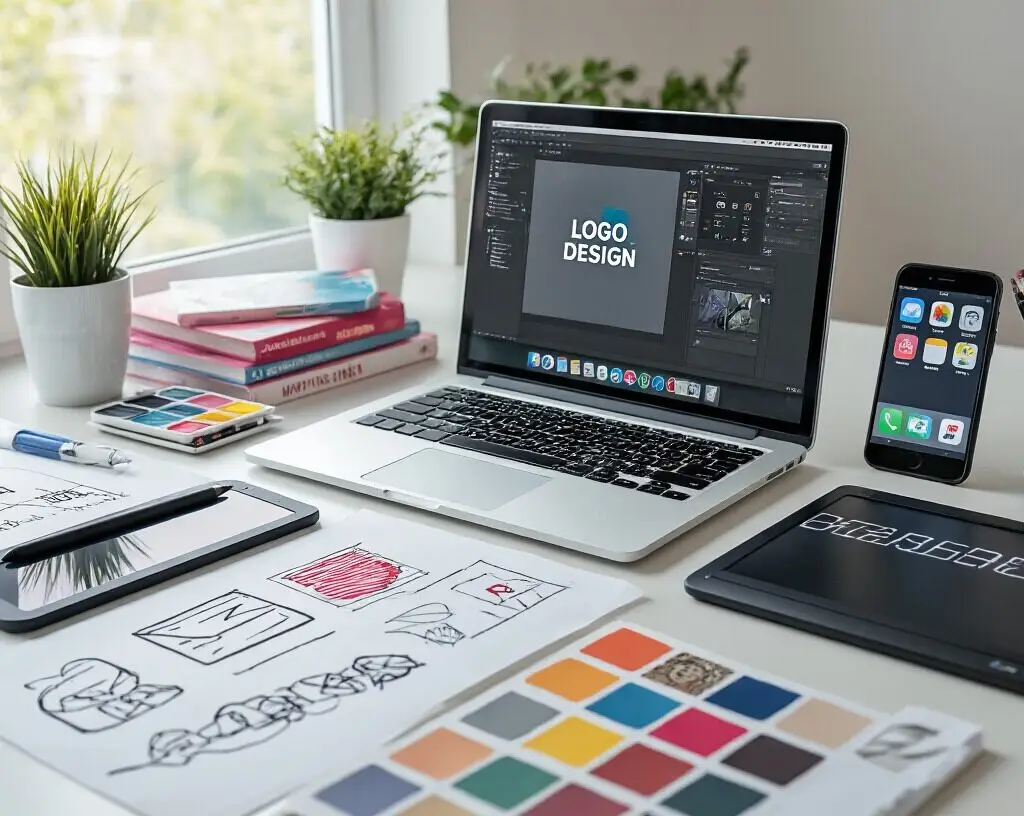
Professional Design Software for Advanced Customization
Professional design software gives you complete creative control over your digital marketing logo. Adobe Creative Suite stands as the industry standard, with Illustrator leading the pack for vector-based logo design. The software’s precision tools, extensive typography options, and scalability features make it perfect for creating logos that work across all digital platforms. You’ll have access to advanced features like custom brush creation, gradient mesh tools, and professional color management systems.
CorelDRAW offers another powerful alternative, particularly popular among Windows users. Its intuitive interface and robust vector editing capabilities make complex logo designs more manageable. Sketch has gained massive popularity among digital designers, especially those working on web and mobile interfaces. Its symbol libraries and artboard system streamline the logo design process.
For those seeking cost-effective alternatives, Affinity Designer provides professional-grade tools without the subscription model. Canva Pro bridges the gap between professional software and user-friendly interfaces, offering advanced features like brand kits, custom fonts, and transparent backgrounds while maintaining simplicity.
| Software | Best For | Price Range | Learning Curve |
| Adobe Illustrator | Professional logos | $20.99/month | Steep |
| CorelDRAW | Windows users | $249/year | Moderate |
| Sketch | Digital-first designs | $10/month | Moderate |
| Affinity Designer | Budget-conscious pros | $69.99 one-time | Moderate |
| Canva Pro | Quick professional results | $14.99/month | Easy |
Online Logo Generators for Quick Solutions
Online logo generators have revolutionized how small businesses and startups approach logo creation. These platforms use artificial intelligence and pre-designed templates to create professional-looking logos in minutes. Looka (formerly Logojoy) leads this space with its AI-powered design engine that learns from your preferences and generates multiple variations.
Brandmark.io takes a different approach, focusing on minimal, modern designs that work particularly well for tech companies and digital agencies. The platform generates logos based on keyword inputs and color preferences, then provides extensive customization options.
Tailor Brands offers a comprehensive branding solution beyond just logo creation, including business cards, social media assets, and brand guidelines. Their questionnaire-based approach helps create logos that align with your brand personality and target audience.
Hatchful by Shopify caters specifically to e-commerce businesses, offering templates optimized for online stores and social media platforms. The free tool provides high-resolution files suitable for both digital and print applications.
Key advantages of online generators:
- Speed and convenience
- Cost-effective solutions
- No design experience required
- Instant file delivery
- Multiple format options
- Built-in brand asset creation
Limitations to consider:
- Limited customization options
- Template-based designs may lack uniqueness
- Fewer typography choices
- Basic color palette options
- No personal consultation or feedback
Freelance Platforms for Hiring Expert Designers
Freelance platforms connect you with talented designers worldwide, offering personalized logo creation at various price points. Upwork provides access to thousands of logo designers with verified portfolios and client reviews. The platform’s messaging system and milestone-based payment structure ensure clear communication throughout the design process.
Fiverr has transformed the freelance design landscape with its service-based marketplace. Logo design gigs start as low as $5, though premium packages from top-rated sellers can reach several hundred dollars. The platform’s gig extras system allows you to add specific services like source files, social media variations, or brand guidelines.
99designs operates on a contest-based model where multiple designers compete for your project. You receive dozens of logo concepts and choose the winning design. This approach provides variety but can be more expensive than traditional freelancing.
Dribbble’s job board connects you with elite designers from their creative community. While more expensive, you’re accessing top-tier talent that often works with major brands and agencies.
Tips for successful freelance collaborations:
- Provide detailed creative briefs
- Share examples of logos you admire
- Establish clear revision policies
- Request vector files and brand guidelines
- Set realistic timelines for quality work
- Communicate your budget upfront
- Check designer portfolios thoroughly
Price ranges across platforms:
- Fiverr: $5-$500
- Upwork: $50-$2,000
- 99designs: $299-$1,299
- Dribbble: $500-$5,000+
Consider your project timeline, budget, and desired level of customization when choosing between these options. Professional software offers maximum control, online generators provide speed and convenience, while freelance platforms deliver personalized expertise at competitive prices.
Implementation Strategies for Maximum Logo Impact
Consistent branding across all marketing channels
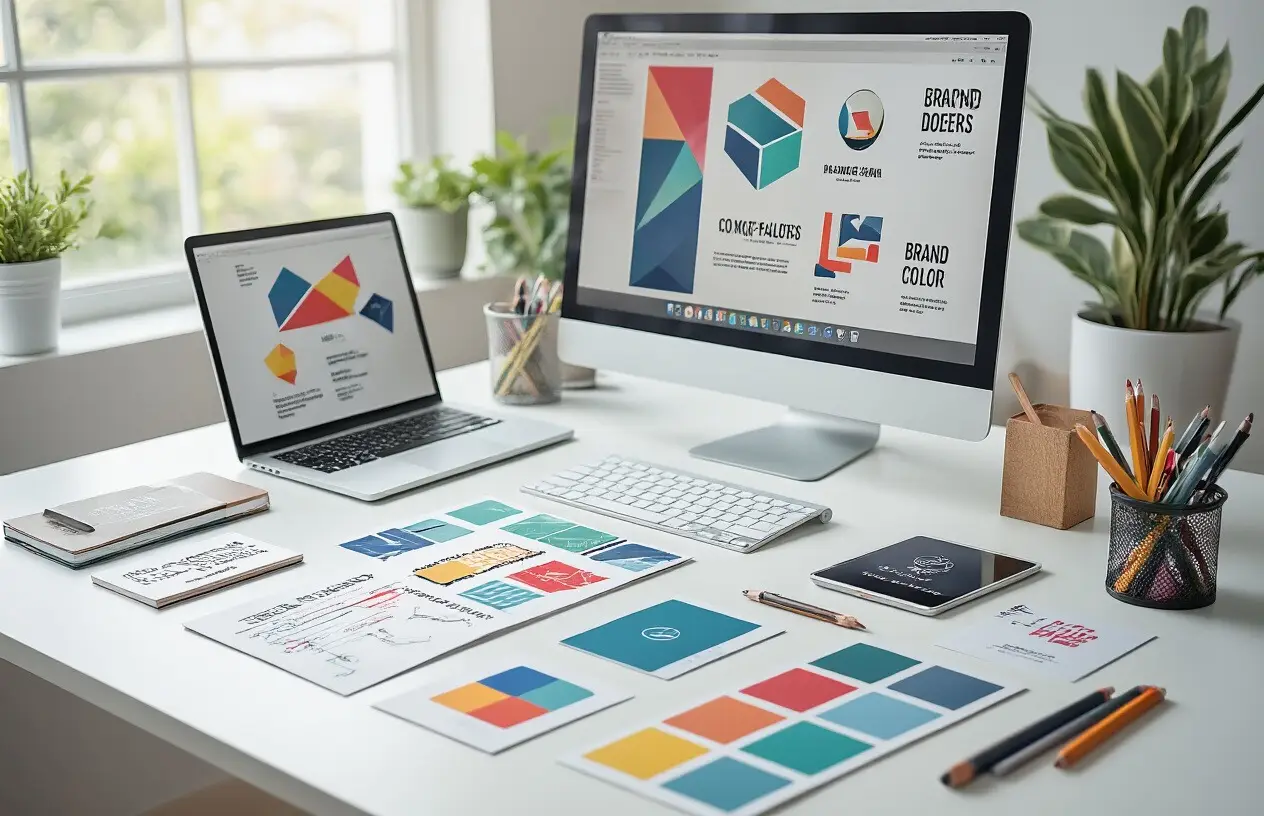
Your logo works hardest when it appears everywhere your audience looks. Social media profiles, email signatures, website headers, business cards, and digital ads all need the same visual treatment. This means using identical colors, proportions, and positioning across every touchpoint.
Create a master logo file in vector format and develop variations for different applications. You’ll need horizontal and vertical layouts, light and dark backgrounds, and simplified versions for small spaces like favicons. Each variation should maintain the core identity while adapting to specific platform requirements.
Platform-specific considerations matter enormously. Instagram profile pictures get cropped to circles, LinkedIn headers have specific dimensions, and email signatures need to load quickly. Prepare your logo assets ahead of time rather than stretching or compressing on the fly, which damages brand perception.
A/B testing methods for logo performance optimization
Split testing your logo reveals what actually works versus what you think works. Start with basic elements like color variations or simplified versus detailed versions. Test one element at a time to get clear data on what drives better engagement.
Email campaigns provide perfect testing grounds for logo performance. Try different logo sizes in headers, test placement positions, or experiment with animated versus static versions. Track open rates, click-through rates, and conversion metrics to identify winning combinations.
Website testing offers deeper insights into user behavior. Heat mapping tools show where visitors look first when they land on your pages. Test logo placement, size, and style while monitoring bounce rates and time on page. Some brands discover their logo works better as a subtle watermark rather than a dominant header element.
Social media ads allow rapid testing cycles with immediate feedback. Create multiple ad variations featuring different logo treatments and monitor engagement rates, click costs, and conversion data. The winning logo style often translates well to other marketing materials.
Legal considerations for trademark protection
Trademark registration protects your logo from copycats and gives you legal grounds to defend your brand identity. Before finalizing any design, conduct thorough searches to avoid infringing on existing trademarks. Professional trademark attorneys can guide you through this process and identify potential conflicts.
Document your logo development process from initial sketches to final designs. This paper trail proves original creation dates and helps establish ownership if disputes arise. Save all design files, emails, and contracts with designers or agencies.
International protection requires separate filings in different jurisdictions. If your digital marketing reaches global audiences, consider filing in key markets where you operate or plan to expand. Madrid Protocol applications can streamline multi-country registration processes.
Monitor trademark databases regularly for similar applications that might conflict with your rights. Set up Google alerts for your brand name and logo descriptions to catch potential infringement early. Quick action often resolves conflicts before they become expensive legal battles.
Brand guideline development for team consistency
Comprehensive brand guidelines prevent logo misuse and maintain professional presentation across all team efforts. Your guide should specify exact color codes (RGB, CMYK, HEX), minimum size requirements, clear space rules, and acceptable backgrounds.
Include examples of correct and incorrect logo usage. Show team members exactly what not to do – stretching, changing colors, adding effects, or placing on busy backgrounds. Visual examples communicate standards better than written descriptions alone.
Distribution and accessibility matter as much as content quality. Store guidelines in shared cloud folders, create quick-reference cards for common applications, and provide easy-to-use logo packages with pre-sized files. The easier you make proper usage, the more likely team members will follow guidelines.
Regular training sessions keep guidelines fresh in everyone’s minds. New team members need thorough orientation, while existing staff benefit from periodic refreshers. Address common mistakes you notice in marketing materials and reinforce best practices.
Measuring logo effectiveness through analytics
Logo performance extends beyond aesthetics into measurable business impact. Track brand recognition surveys, social media mention sentiment, and website engagement metrics tied to pages featuring your logo prominently.
Brand recall studies reveal how memorable your logo is compared to competitors. Online surveys through platforms like SurveyMonkey or UserTesting can gather quantitative data on logo recognition, association with your brand values, and emotional response.
Website analytics provide concrete performance indicators. Compare bounce rates, session duration, and conversion rates for pages with different logo treatments. Google Analytics can track specific interactions with logo elements when properly configured with event tracking.
Social media metrics offer real-time feedback on logo reception. Monitor engagement rates on posts featuring your logo, track profile visits after logo updates, and analyze follower growth patterns. Platform-specific insights often reveal which logo variations resonate best with different audience segments.
Customer feedback surveys should include questions about brand perception and logo recognition. Net Promoter Score surveys can incorporate visual brand elements to understand how logo changes affect overall brand sentiment and recommendation likelihood.
Your digital marketing logo is more than just a pretty picture – it’s the face of your brand that needs to work hard across every platform and touchpoint. From understanding the essential elements like scalability and color psychology to mastering design principles that create instant recognition, every choice you make shapes how customers perceive your business. The most successful digital marketing logos today blend simplicity with personality, using modern design trends while staying true to brand values.
Ready to create a logo that actually drives results? Start by choosing the right tools for your skill level and budget, then focus on consistent implementation across all your digital channels. Remember, your logo should look just as good on a tiny mobile screen as it does on a billboard. Take the time to get it right – a well-designed logo pays dividends for years to come and can be the difference between blending in and standing out in today’s crowded digital landscape.